Email Delivers ROI, But Can You Prove It?
Email drives strong ROI, yet many marketing teams struggle to measure its financial impact, relying instead on engagement metrics over revenue data.
Key takeaways
- Email delivers strong ROI, with many teams reporting returns above $10 for every $1 spent.
- Transactional emails are easier to measure due to their direct connection to customer actions.
- Relying on engagement metrics like click rates can obscure email’s true financial impact.
- Investing in revenue-based measurement tools and metrics is critical to proving email’s value.
Email marketing remains one of the most essential tools in a marketer’s arsenal. According to Sinch Mailgun’s latest Email Impact Report, 78% of marketers rank email as “very” or “extremely” important to their organization’s success. Yet, there’s a paradox: while email consistently delivers high returns, many teams fail to measure its true ROI effectively.
This disconnect between email’s perceived importance and its measurability creates a dilemma. Teams rely heavily on the channel, but when it comes to justifying budgets or expanding efforts, the lack of concrete ROI data can undermine their case. Let’s dive into the numbers, the challenges, and the actionable steps to bridge this gap.
Email ROI: The Evidence Is Clear
For teams that do track email channel ROI, the results are impressive. Among marketers who measure promotional email performance, 60% report returns exceeding $10 for every dollar spent. Transactional email performs even better, with 62% of those measuring ROI seeing the same level of returns.
Even more striking, a smaller subset of marketers reports exceptionally high returns. Specifically, 13% of those tracking promotional email ROI and 14% measuring transactional email ROI claim to generate over $40 for every dollar invested. These numbers are hard to ignore, illustrating email’s potential as a high-performing channel when properly measured.
Transactional Email: Easier Attribution, Higher Confidence
Part of the reason transactional email shows such strong ROI is its inherent traceability. These emails—order confirmations, shipping updates, password resets—are directly tied to customer actions, making their impact easier to measure. If a customer completes a purchase and immediately receives a confirmation email, the connection to revenue is clear and direct.
In contrast, promotional email faces a more complex attribution challenge. Campaigns often span multiple touchpoints and longer buying cycles, making it difficult to tie specific emails to revenue. This complexity frequently drives marketing teams to rely on engagement metrics like open rates and click-through rates, which, while useful, fall short of capturing true financial impact.
The Problem With Engagement Metrics
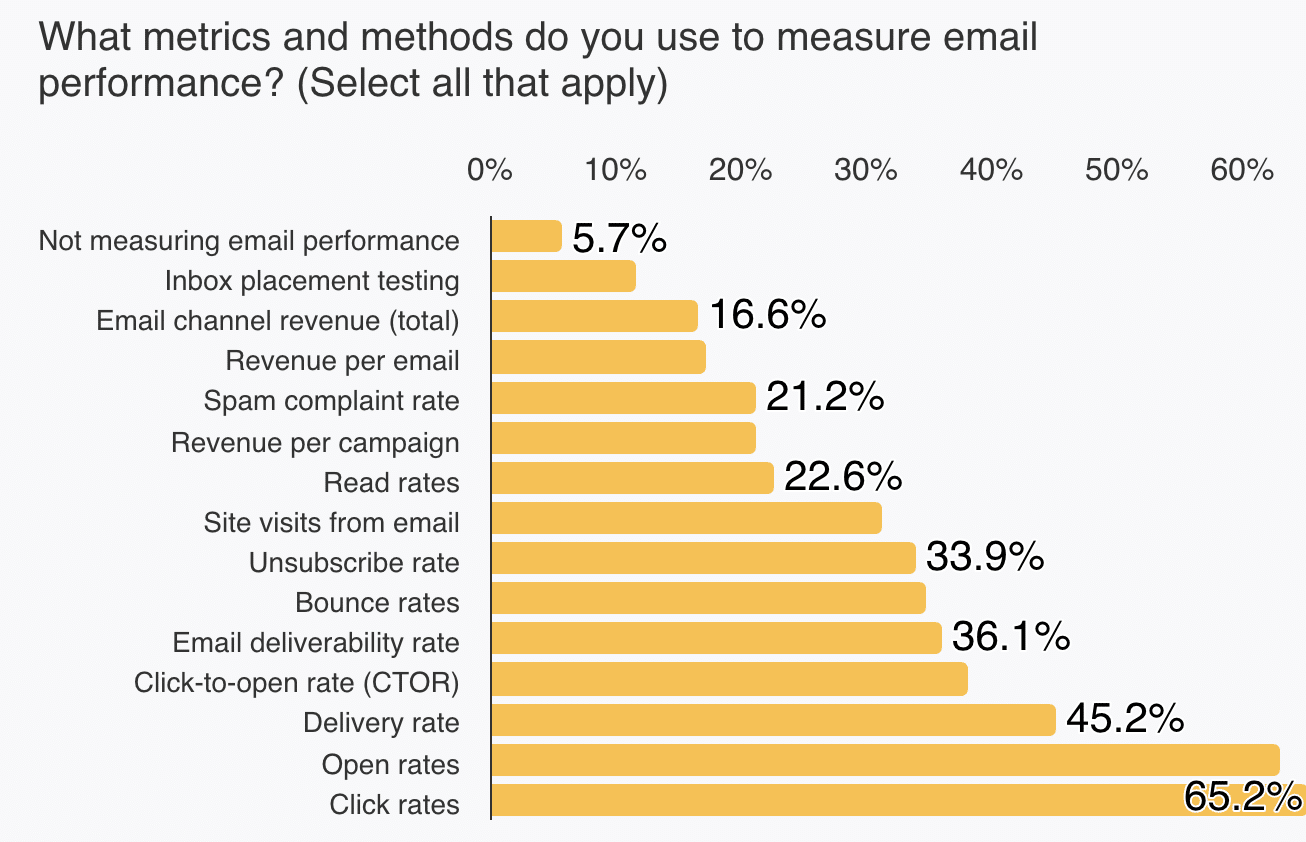
Despite email’s potential to deliver substantial ROI, many marketers remain fixated on metrics like delivery rates, click rates, and open rates. These are easy to track and explain but don’t directly connect to financial outcomes. For example, a high open rate may indicate strong subject line performance, but it doesn’t necessarily mean the campaign drove revenue.
Revenue-based measurements, such as revenue per email or total channel revenue, are far less common. This gap in measurement not only obscures email’s financial contribution but also weakens the case for additional investment. According to the report, budget constraints are the top barrier to scaling email efforts, followed by challenges in proving ROI, prioritizing email, and addressing strategy or integration issues.
Bridging the ROI Gap
Improving the measurement of email performance starts with moving beyond engagement metrics. Teams need to invest in tools and processes that enable revenue attribution. This could involve integrating email platforms with CRM systems to track downstream conversions or adopting advanced analytics solutions that map email campaigns to sales outcomes.
Another critical step is prioritizing revenue-based KPIs during campaign planning and reporting. Marketers should focus on metrics such as revenue per email sent, customer lifetime value (CLV) influenced by email, and email’s contribution to overall sales. By aligning email measurement with business outcomes, teams can make a more compelling case for resources and strategic prioritization.
What This Means For You
If email is a major part of your marketing strategy, it’s time to assess whether you’re measuring its performance effectively. Start by auditing your current metrics—are you relying too heavily on engagement data? If so, identify gaps in your measurement framework and explore tools that can help connect email activity to revenue.
Additionally, consider the balance between transactional and promotional email efforts. If transactional email is delivering clear ROI, it might be worth allocating more resources to optimizing and scaling these campaigns. For promotional email, focus on creating attribution models that capture its influence across the customer journey.
Email marketing’s potential is undeniable, but realizing its full value requires a shift in how teams measure success. With the right tools, metrics, and mindset, you can turn email into a measurable growth driver for your business.
Key Takeaways
- Email delivers strong ROI, with many teams reporting returns above $10 for every $1 spent.
- Transactional emails are easier to measure due to their direct connection to customer actions.
- Relying on engagement metrics like click rates can obscure email’s true financial impact.
- Investing in revenue-based measurement tools and metrics is critical to proving email’s value.
Next move
Continue the operator thread — or move from reading to execution.
Continue reading
More Originae insights from the same operating thread.

How HubSpot Mastered AI-Driven Answer Engine Optimization
HubSpot leveraged answer engine optimization (AEO) to dominate AI search visibility. Here's how they built, measured, and scaled their strategy.

Why AI Prioritizes Brand Meaning Over Media Spend
AI systems reward brands with clarity and trust signals, while punishing transactional marketing approaches, reshaping long-term visibility strategies.

Assessing the Health of Your Martech Stack in 2026
Is your martech stack evolving efficiently or quietly draining resources? Explore key insights from the 2026 State of Your Stack survey.