Meta’s AI Zuck: what building a photorealistic avatar actually implies
Reporting says Meta is developing a photorealistic AI version of Mark Zuckerberg for employee interactions — a clear signal about where internal AI tooling and governance need to land.
Key takeaways
- Meta is reported to be prioritizing a photoreal, real-time AI character of Mark Zuckerberg.
- Photoreal, multimodal agents raise technical, safety and legal complexity beyond chatbots.
- Constrain persona domains, require transparency and human-in-the-loop controls.
- Phase pilots, define measurable safety criteria, and budget for monitoring and incident response.
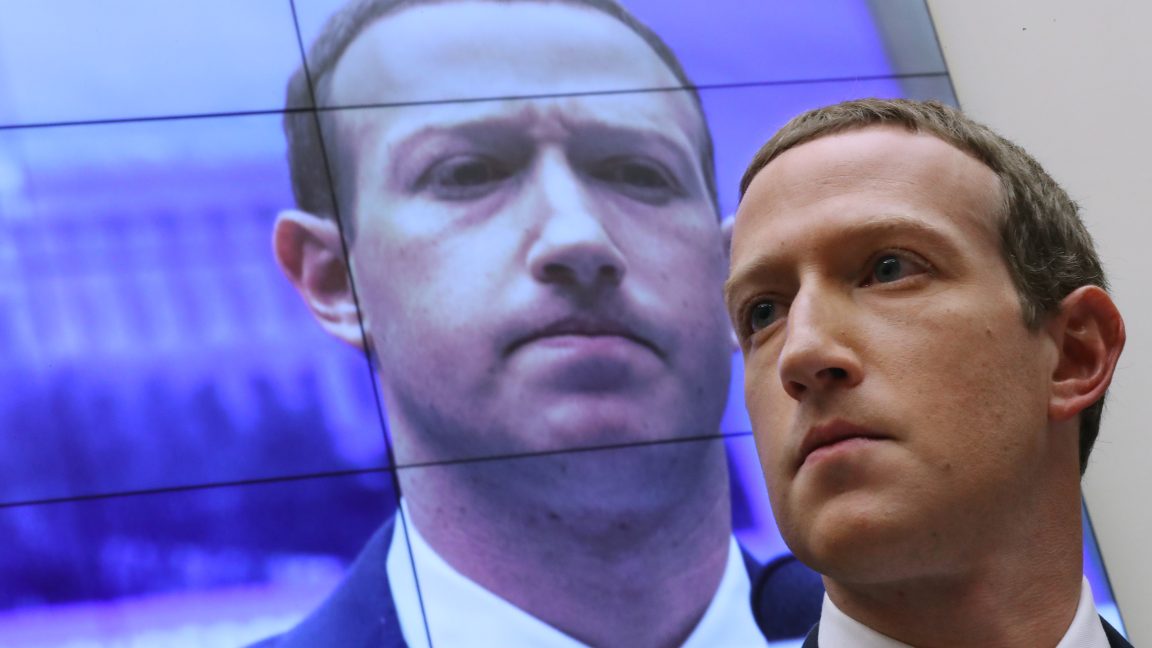
Recent reporting indicates Meta is developing a photorealistic, AI-driven 3D character modeled on Mark Zuckerberg designed to engage with employees in real time. The project is part of a wider company effort to reorganize around AI; the parent group is valued at approximately $1.6 trillion, and multiple sources describe a renewed emphasis on interactive, photoreal avatars.
Details are scarce: the initiative is said to be underway and, according to people familiar with the matter, Meta has recently prioritized a Zuckerberg-branded character. The public facts are limited, but the decision to pursue internal-facing, realistic AI personas has clear operational consequences for product teams, legal, and workplace systems.
What the reported build means in practical terms
The coverage highlights two concrete technical features: the work targets photorealistic 3D characters and real-time interaction. That combination shifts the project from a simple chatbot to a multimodal system that must integrate visual rendering, speech and gesture synthesis, state management, and conversational AI.
- Photorealism requires higher-fidelity assets and stricter latency control than avatar-style UIs. Rendering and synchronization are non-trivial engineering costs.
- Real-time interaction compounds safety and moderation needs: responses will be visible and potentially recorded, increasing reputational exposure.
- Labeling the character with a public executive’s identity raises identity, consent and brand-risk questions that extend beyond technical execution.
Operational and governance challenges to anticipate
Turning an executive likeness into a live AI agent touches multiple operational domains. Even without confirming Meta’s internal plans, teams building similar systems should plan for the following realities.
1. Ownership and decision rights
Who signs off on the persona, its permitted behaviors, and escalation pathways? The design owner (product), content owner (communications/legal), and technical owner (ML/infra) must have aligned gates. Expect cross-functional committees or rapid review cycles for high-profile personas.
2. Safety, accuracy and hallucination risk
Generative models can produce plausible but false statements. When the avatar speaks for a company leader, the cost of hallucination is higher—misinformation could spread internally or leak externally. Controls need to be layered:
- response templates or constrained generation for factual domains
- real-time filters and confidence thresholds
- clear error states and human-in-the-loop escalation
3. Consent and legal exposure
Using a real person's likeness—even internally—intersects with personal rights, publicity, and employment considerations. Legal teams should evaluate consent documentation, the scope of permissible statements, and retention policies for interaction logs.
Design and system patterns to reduce risk
If you’re building similar systems, prioritize patterns that limit blast radius while preserving utility.
Constrain the persona’s domain
Limit the avatar’s remit to a small set of use cases where determinism is feasible: HR FAQs, calendar coordination, onboarding scripts, or corporate policy pointers. For open-ended requests, the system should surface links to documents and delegate to humans.
Adopt explicit truth-sourcing
Make sources visible and verifiable. If the avatar answers a policy question, attach or display the policy reference and a timestamp. This converts the interaction from a single generative utterance into a traceable document lookup.
Engineer for transparency and reversibility
Record decisions and make them auditable. Maintain an interaction log with redaction where required, and ship tooling to replay and debug individual sessions. Ensure there is an off-ramp for human takeover and that humans can correct or retract content the avatar produced.
Photorealistic, real-time avatars move responsibility from model-building to operational governance: the interface magnifies any mistake.
Implementation constraints worth budgeting for
From an engineering perspective, three categories will drive cost and schedule.
- Compute and infra: Low-latency rendering and multimodal model inference need beefy inferencing stacks and edge-aware delivery.
- Data and labeling: Persona tuning, voice cloning, gesture mapping and safe-response training require curated datasets and iterative evaluation.
- Monitoring and ops: Real-time moderation, telemetry, and rollback systems are mandatory. Expect to build custom dashboards and alerting tied to both model confidence and behavioral metrics.
How to run a pilot that balances speed and control
For teams moving from concept to execution, a phased approach reduces exposure while producing early value.
- Phase 0 — Define: establish scope, owners, and acceptance criteria. If the persona is executive-branded, require signed consent and a documented list of acceptable activities.
- Phase 1 — Sandbox: build a non-photoreal proof of concept limited to one deterministic domain. Validate workflows, audit logs, and escalation mechanics internally.
- Phase 2 — Controlled rollout: introduce photoreal rendering and broader access to a small employee cohort. Monitor for behavioral drift and collect qualitative feedback.
- Phase 3 — Iterate or pause: only expand after metrics on accuracy, safety incidents, and legal sign-offs meet predefined thresholds.
What This Means For You
If your company is considering executive-branded AI or photoreal agent interfaces, treat the project as a system-of-systems problem, not a feature sprint. Practical next steps:
- Map stakeholders across product, infra, legal, communications and HR before any prototype reaches users.
- Define narrow, measurable success criteria tied to safety and factuality, not just engagement numbers.
- Build short-circuit mechanisms: deterministic fallbacks, human takeover, and documented consent for any use of real-person likenesses.
- Budget for monitoring and incident response as a first-class cost — this is not handled after launch.
Key Takeaways
- Meta is reported to be prioritizing a photoreal, real-time AI character of Mark Zuckerberg as part of a wider AI refocus.
- Photoreal, multimodal agents increase technical and reputational risk compared to text-only chatbots.
- Successful implementation requires clear ownership, constrained domains, auditability and human-in-the-loop controls.
- Run phased pilots with explicit success criteria, consent, and robust monitoring before broad rollout.
Next move
Continue the operator thread — or move from reading to execution.
Continue reading
More Originae insights from the same operating thread.

Microsoft Trials OpenClaw-Style Agents to Make Copilot Autonomous
Microsoft is exploring OpenClaw-style, locally running agents for Microsoft 365 Copilot to enable continuous autonomous task execution — raising operational and security trade-offs.

Meta’s Zuckerberg AI: what founders and CTOs should watch
Meta is reportedly training an AI avatar of Mark Zuckerberg to interact with employees and may extend creator avatars if successful — here’s the operational playbook.

How engineering teams should respond as the AI code wars intensify
AI-assisted coding tools began by autocompleting lines for developers; now the competitive landscape is accelerating. Practical steps for teams to adopt, measure, and govern these tools.