Why top AIs failed at soccer betting — lessons from KellyBench
KellyBench replayed the 2023–24 Premier League for eight leading models; despite rich data, the AIs lost money, exposing limits in long-horizon real-world reasoning.
Key takeaways
- Top models lost money over a simulated 2023–24 Premier League season despite rich historical inputs.
- Performance on single-shot benchmarks doesn't ensure robustness in sequential, real-world tasks.
- Calibration, regime-detection, and money-management layers are non-negotiable for decision systems.
- Operational validation must include long-horizon simulation and continuous risk monitoring.
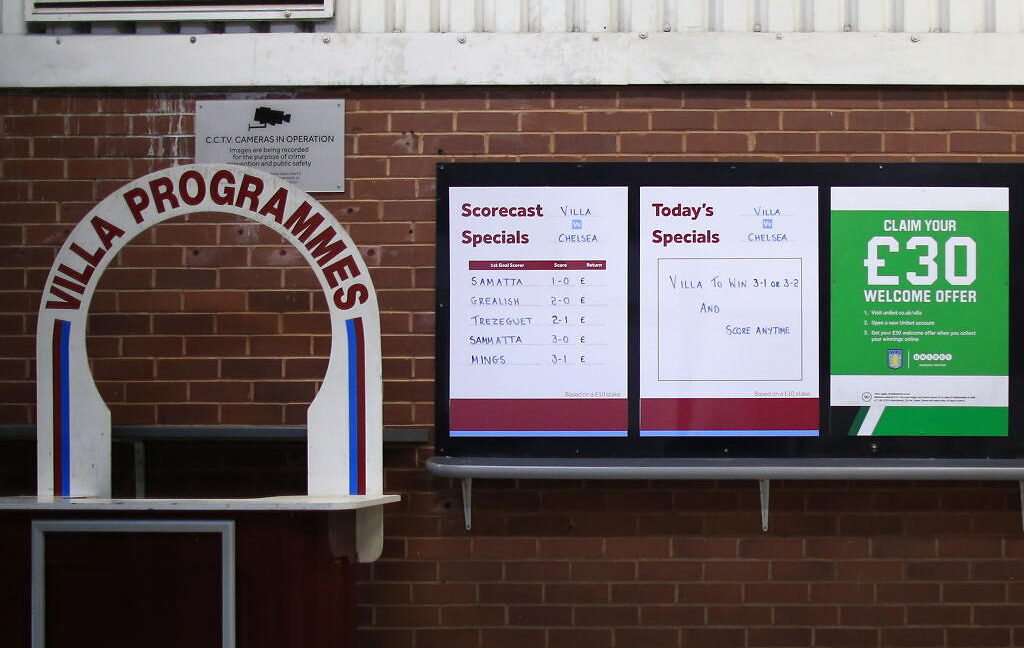
General Reasoning, a London-based AI start-up, replayed an entire Premier League season inside a simulated betting environment to evaluate eight leading models. The systems were supplied with comprehensive historical statistics and instructed to design strategies that would both maximize returns and manage risk.
The headline result is blunt: the models lost money over the season. That outcome sits uneasily next to recent demonstrations of AI proficiency in tasks like code generation — and it highlights a practical gap: short-horizon, synthetic tasks are not the same as long-running, messy decision problems in the wild.
What KellyBench did and why it matters
Rather than a theoretical probe or an isolated test case, KellyBench recreated the 2023–24 Premier League season and treated it as a sequential decision-making problem. The teams behind the experiment gave models detailed historical data on teams and prior games, then asked them to translate that data into a betting strategy.
Why this design is revealing for operators and founders:
- It evaluates models across repeated, interdependent events rather than one-off prompts.
- It forces models to balance return and risk across many decisions, not just a single prediction.
- It stresses models with distributional shifts, emergent tactics, and the economic feedback loop of a market.
Key takeaways from the results
The experiment reached three overlapping conclusions that matter for anyone deploying AI inside operational systems.
1. High capability on narrow tasks doesn’t imply durable real-world performance
The same architectures that generate useful code or clean summaries are not guaranteed to synthesize noisy, non-stationary signals across months. Betting on sports aggregates many weak signals — injuries, managerial changes, form swings, motivational factors — and requires a stable calibration of probabilities over time. The models in KellyBench failed to convert the historical information they received into a consistently profitable strategy over the season.
2. Data access alone is not a substitute for modeling assumptions
KellyBench provided detailed historical stats, but data richness didn’t prevent losses. This underscores a simple operational truth: better inputs help only if the modeling framework accounts for overfitting, regime change, and the difference between correlation and causation. In dynamic environments, naive extrapolation from past matches is a weak defense.
3. Risk-management at scale is different from pointwise accuracy
Accuracy on match outcomes and robustness under a portfolio of bets are distinct objectives. The test required balancing return and risk across many bets — an area where AI systems often lack consistent, calibrated long-horizon strategies. A sequence of low-probability losses or poorly sized stakes can defeat otherwise reasonable predictions.
Even sophisticated models that shine on single tasks can stumble when asked to manage repeated, economically consequential decisions in an evolving environment.
Operational failure modes to watch
For teams integrating AI into production systems, the KellyBench outcomes point to several concrete failure modes.
- Overfitting to historical quirks: Models can latch onto spurious patterns present in the training window that don’t generalize when conditions shift.
- Poor calibration: Probabilistic outputs that aren’t well-calibrated lead to mis-sized positions and compounding losses.
- Distribution shift: Seasonal dynamics and single events (e.g., injuries, transfers) change the environment faster than static models adapt.
- Failure of multi-step planning: Short-horizon predictions don’t account for how a decision today affects opportunities tomorrow.
How that translates into product and system design
If you’re deploying models to make sequential, financially meaningful decisions, the experiment suggests practical countermeasures:
- Segment the decision horizon: separate immediate predictions from the portfolio-level allocation logic.
- Insist on calibration tests over long simulated runs, not only pointwise accuracy metrics.
- Build explicit regime-detection: flag and treat data windows where core statistics change.
- Design for graceful degradation: when confidence falls, reduce exposure rather than amplify it.
What This Means For You
Translate the lessons from KellyBench into operational guardrails before you rely on AI for sequential financial or strategic decisions:
- Validate models with out-of-time simulated runs that mirror the cadence and feedback of real operations.
- Require probabilistic calibration as a hard acceptance criterion, not a nice-to-have metric.
- Separate forecasting from allocation: use a conservative, tested money-management layer on top of model predictions.
- Implement automated regime-change detectors and rapid retraining pipelines so models adapt on operational timescales.
- Monitor risk metrics continuously and stop-loss exposures programmatically when unusual patterns emerge.
Key Takeaways
- State-of-the-art models lost money betting across a full Premier League season despite detailed data.
- Success on narrow benchmarks does not guarantee stable performance in long-horizon, noisy environments.
- Calibration, regime detection, and portfolio-level risk controls are essential when AI makes repeated decisions.
- Operational testing should use sequential simulations that reflect the real feedback loops of your business.
Next move
Continue the operator thread — or move from reading to execution.
Continue reading
More Originae insights from the same operating thread.

Microsoft Trials OpenClaw-Style Agents to Make Copilot Autonomous
Microsoft is exploring OpenClaw-style, locally running agents for Microsoft 365 Copilot to enable continuous autonomous task execution — raising operational and security trade-offs.

Meta’s AI Zuck: what building a photorealistic avatar actually implies
Reporting says Meta is developing a photorealistic AI version of Mark Zuckerberg for employee interactions — a clear signal about where internal AI tooling and governance need to land.

Meta’s Zuckerberg AI: what founders and CTOs should watch
Meta is reportedly training an AI avatar of Mark Zuckerberg to interact with employees and may extend creator avatars if successful — here’s the operational playbook.